Paws & Plates
Client:
Animals
Role:
Designer
Service:
App Design
Year:
2026

Overview
This is a personal project exploring how design can address the gap between food waste and stray animal hunger.
The idea focuses on creating a system where leftover food can be easily donated and redistributed through a structured network of animal shelters and volunteers.
The goal was not just to design an interface, but to build a feasible, behavior-driven solution that encourages people to contribute consistently.
Despite a clear need, food donation for animals is not a common behavior.
Key challenges identified:
Food waste is high, especially at household and event levels
Stray animals lack consistent access to food
No structured system connects donors to animal shelters
Donation feels inconvenient and time-consuming
Lack of trust — users don’t know what happens after donating
No feedback loop, leading to low repeat engagement
Additionally, practical concerns exist:
How is food quality ensured?
Who handles pickup and delivery?
What happens if requests are not fulfilled?
These gaps prevent users from taking action, even if they are willing to help.
A mobile-first platform designed to make food donation simple, reliable, and repeatable.
Core System
Food collection is handled by verified animal shelters (NGOs) and local volunteers
Nearby collectors are assigned to ensure faster pickups
The system expands the pickup radius if no one initially accepts the request
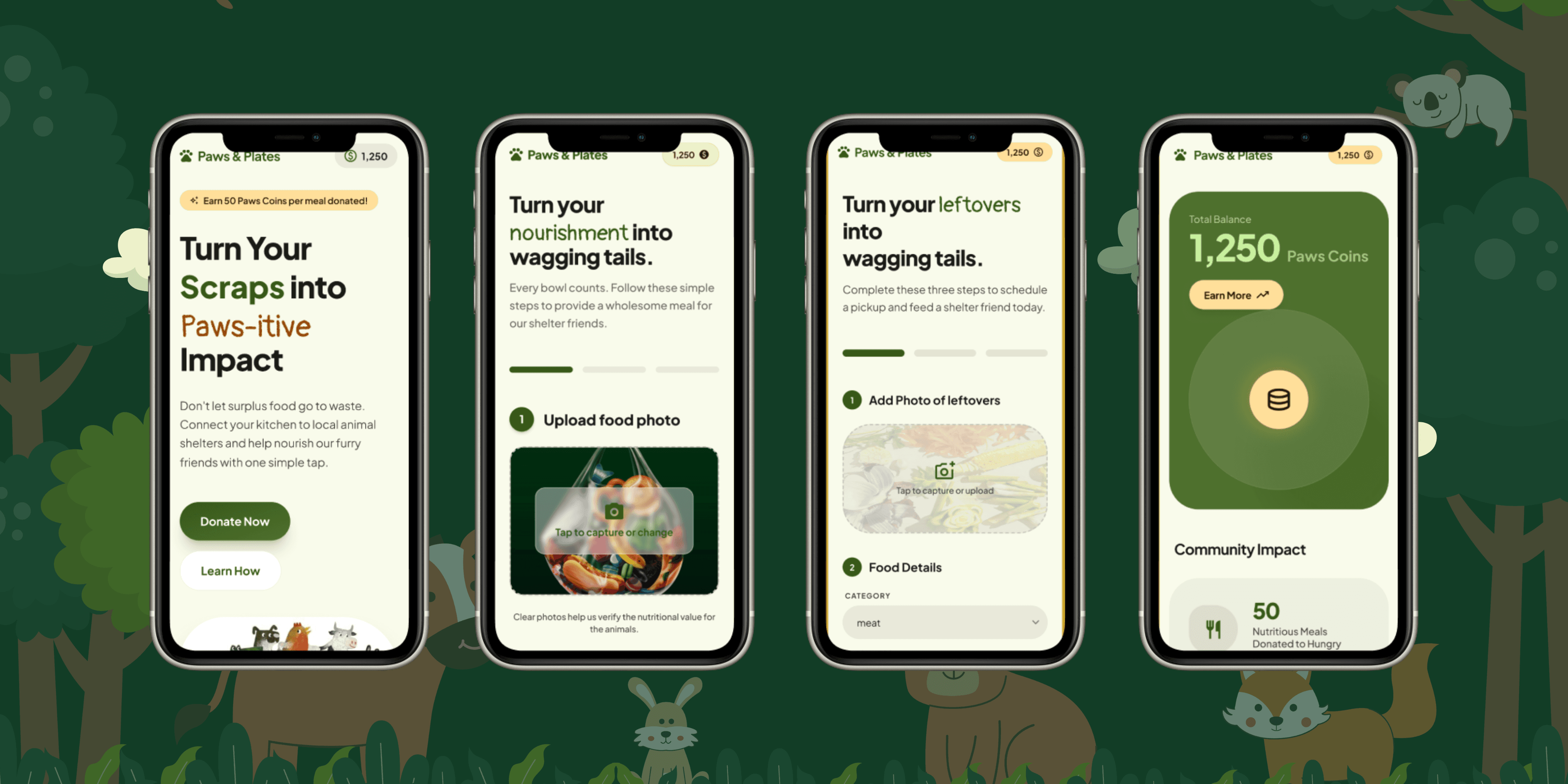
Donation Flow
Users upload food details (type, quantity, freshness)
Mandatory image upload ensures basic validation
Users schedule a pickup time
Request is assigned to a nearby verified collector
The flow is designed to be completed in under 30 seconds, reducing friction.
Trust & Safety
To address safety concerns:
Structured inputs (food type, time since prepared)
Image-based verification
Final validation by the pickup agent
Unsafe food is rejected at the pickup stage
Transparency
Real-time status tracking (requested → accepted → picked → delivered)
Clear confirmation once food is successfully utilized
This ensures users know where their contribution goes.
Behavior Design
The system encourages continued usage through:
Impact feedback (e.g., number of animals fed)
Reward system (points, badges, recognition)
Occasional reminders and notifications
The focus is on combining emotional motivation + convenience + light incentives.
Usage Pattern
This is designed as an occasional-use product, triggered when users have surplus food, rather than a daily-use application.
This project demonstrates a system that:
Reduces friction between intent and action
Builds trust through transparency and verification
Encourages repeat behavior through feedback and rewards
Connects two disconnected problems into a single solution
Key Takeaways
Convenience is the primary driver of user action
Trust and transparency are essential in systems involving physical exchange
Feedback loops significantly improve user retention
Effective UX goes beyond screens and considers real-world feasibility
Closing Thought
Designing for impact requires not just solving a problem, but creating a system that people are willing to adopt in their everyday lives.